

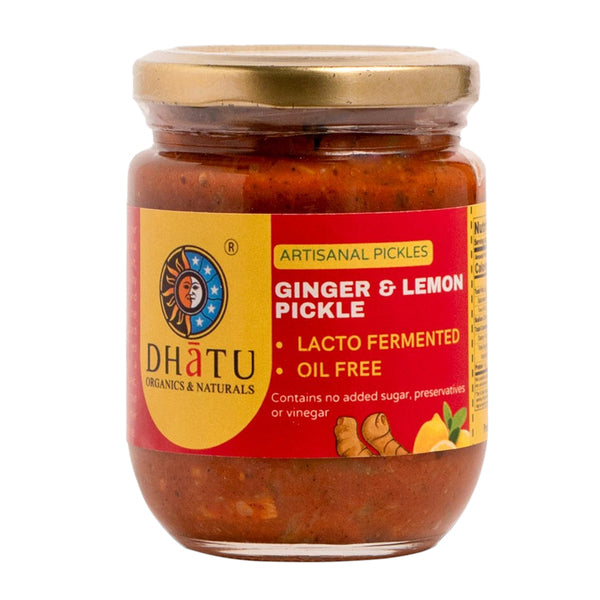
Lacto-Fermented Ginger Lemon Pickle 250g – No Oil, No Vinegar
₹ 250.00
Dhatu Organics Lacto-Fermented Ginger Lemon Pickle is a traditional Indian pickle made without oil, without vinegar, and without any preservatives. Fresh ginger and whole lem... Read more ↓
100% Organic
No Additives
Free Delivery ₹499+
Fresh Ginger (Zingiber officinale), Whole Lemon (Citrus limon), Sea Salt, Organic Turmeric Powder, Green Chilli, Fenugreek Seeds
Nutrition Facts
| Nutrient | Per serving | Per 100g | % RDA* |
|---|---|---|---|
| Energy | 12 kcal | 60 kcal/100g | |
| Protein | 0.28 g | 1.4 g/100g | |
| Carbohydrates | 2.6 g | 13.0 g/100g | |
| — of which Sugars | 0.5 g | 2.5 g/100g | |
| Total Fat | 0.10 g | 0.5 g/100g | |
| Dietary Fibre | 0.7 g | 3.5 g/100g | |
| Sodium | 475 mg | 2375 mg/100g | |
| Vitamin C | 8 mg | 40 mg/100g |
* % RDA based on a 2000 kcal reference diet (FSSAI). Values are approximate and may vary by batch.
We deliver across India within 3–5 business days via trusted logistics partners.
- Free delivery on orders above ₹499.
- Orders dispatched within 1 business day of payment confirmation.
- Perishable goods cannot be returned once dispatched. Non-perishable items may be returned within 7 days in original, unopened condition.
- For damaged or incorrect items, contact info@dhatuorganics.com within 48 hours of delivery.
Choose Your Pack
Dhatu Organics Lacto-Fermented Ginger Lemon Pickle is a traditional Indian pickle made without oil, without vinegar, and without any preservatives. Fresh ginger and whole lemons are salt-brined and left to ferment naturally — allowing indigenous Lactobacillus cultures to develop, acidify the brine, and produce live probiotic cultures. The result is a fiery, tangy condiment that has been a cornerstone of Ayurvedic digestive support for centuries. A spoonful before a meal is one of the oldest gut-health rituals in South Asian cooking.
What Makes This Different: Most commercial pickles are made with oil and synthetic vinegar (acetic acid) to simulate fermentation flavour — but without any live cultures. Dhatu's Ginger Lemon Pickle is true lacto-fermentation: salt + time + naturally occurring bacteria. The brine is alive. The result is a probiotic-rich, oil-free pickle with measurable Lactobacillus plantarum and L. fermentum populations and a naturally acidic pH below 4.0.
🌿 Ingredients
- Fresh Ginger (Zingiber officinale)
- Whole Lemon (Citrus limon)
- Sea Salt (non-iodised)
- Organic Turmeric Powder (Curcuma longa)
- Green Chilli (Capsicum annuum)
- Fenugreek Seeds (Trigonella foenum-graecum)
No oil · No vinegar · No preservatives · No artificial colour
Lacto-Fermented
Oil-Free
Probiotic-Rich
Vegan
📊 Nutrition Facts
Per 100g · Per 20g serving (1 heaped tbsp)
| Nutrient | Per 100g | Per 20g |
|---|---|---|
| Energy | 60 kcal | 12 kcal |
| Protein | 1.4 g | 0.28 g |
| Carbohydrates | 13.0 g | 2.6 g |
| — of which Sugars | 2.5 g | 0.5 g |
| Total Fat | 0.5 g | 0.10 g |
| Dietary Fibre | 3.5 g | 0.7 g |
| Sodium | 2,375 mg | 475 mg |
| Vitamin C | 40 mg | 8 mg |
| Live Cultures | 10⁷–10⁹ CFU/g (L. plantarum, L. fermentum) | |
Values approximate. Sodium is inherent to lacto-fermentation — use as a condiment (1–2 tbsp/serving). Probiotic counts at time of packing.
The Science of Lacto-Fermentation
Lacto-fermentation is one of the oldest food preservation techniques in human history — predating refrigeration by millennia. When vegetables and fruits are submerged in a salt brine, the salt suppresses pathogenic bacteria while allowing salt-tolerant Lactobacillus species to flourish. These bacteria consume the natural sugars in the vegetables and produce lactic acid, which acidifies the brine and creates a self-preserving, probiotic-rich environment.
| Organism | Role in Fermentation | Documented Benefit |
|---|---|---|
| Lactobacillus plantarum | Primary acidifier; produces bacteriocins (natural antimicrobials) | Gut barrier integrity, anti-inflammatory signalling |
| Lactobacillus fermentum | Secondary fermenter; antioxidant enzyme production | Oxidative stress reduction, cholesterol modulation |
| Lactobacillus brevis | Contributes to flavour complexity; GABA production | Calming effect, potential blood pressure support |
Ginger6-Gingerol — anti-nausea, motility, anti-inflammatory
LemonHesperidin, Limonene — antioxidant, liver support
TurmericCurcumin — anti-inflammatory, antimicrobial
FenugreekSaponins — blood sugar modulation, digestion
Green ChilliCapsaicin — thermogenic, circulatory stimulant
Key Benefits
- Probiotic Support for Gut Health: Each tablespoon delivers 10⁷–10⁹ colony-forming units of live Lactobacillus species. A 2021 Stanford study found fermented food consumption significantly increases microbiome diversity and reduces inflammatory cytokines — superior to high-fibre diets alone for gut immune modulation.
- Digestive Enzyme Stimulation: Ginger (6-gingerol) accelerates gastric emptying and stimulates bile secretion. Fenugreek seeds contain soluble fibre (galactomannan) that slows carbohydrate digestion and supports healthy post-meal glucose response. Taken before meals, this pickle is a classic Ayurvedic digestive primer.
- Antioxidant-Rich Brine: Lemon provides hesperidin and eriocitrin, which improve endothelial function and reduce oxidative LDL modification. Limonene (from lemon rind) has demonstrated hepatoprotective and anti-inflammatory activity in preclinical studies.
- Anti-Nausea and Motion Sickness: Ginger's 6-gingerol and 6-shogaol are among the most well-studied natural anti-emetics. A meta-analysis of 12 RCTs confirmed ginger's effectiveness for nausea reduction in pregnancy, chemotherapy, and post-operative settings.
- Oil-Free, Low-Calorie Condiment: At only 12 kcal per tablespoon with 0.1g fat, this pickle adds intense flavour and genuine functional benefit without the caloric load of oil-based pickles.
- Natural Vitamin C Source: Each serving provides approximately 8mg of Vitamin C from lemon — contributing to immune support, iron absorption, and collagen synthesis.
Research Summary
| Compound / Process | Source | Evidence Level | Observed Effect |
|---|---|---|---|
| Lacto-fermentation (L. plantarum) | Brine | Multiple RCTs | Gut microbiome diversity ↑, IL-6 ↓ |
| 6-Gingerol / 6-Shogaol | Ginger | Meta-analysis (12 RCTs) | Nausea ↓, gastric motility ↑ |
| Hesperidin / Eriocitrin | Lemon | RCT, human | Endothelial function ↑, blood pressure ↓ |
| Curcumin | Turmeric | 100+ clinical trials | Inflammatory cytokines ↓, NF-κB ↓ |
| Galactomannan | Fenugreek | Meta-analysis | Fasting glucose ↓, insulin resistance ↓ |
Serving Suggestions
- Before Meals (Digestive Primer): Eat ½–1 tsp alongside your first bite of food — the acids and gingerols signal the stomach to begin producing digestive enzymes.
- With Dal and Rice: A staple Indian pairing. The tangy, spiced brine cuts through richness and adds depth to simple meals.
- As a Salad Dressing Base: Dilute 1 tbsp with olive oil, black pepper, and a drizzle of honey for a probiotic salad dressing.
- With Idli, Dosa, or Uttapam: Pairs perfectly with South Indian breakfast dishes in place of chutneys.
- Charcuterie and Cheese Boards: The zingy, fermented flavour pairs beautifully with mild cheeses and crackers.
- Yoghurt Dip: Stir 1 tsp into plain yoghurt for a quick fermented raita substitute.
Frequently Asked Questions
How is this different from oil-based pickle?
Traditional oil-based pickles are preserved through a combination of oil, salt, and often synthetic vinegar. They are calorie-dense and typically contain no live cultures. Dhatu's lacto-fermented pickle uses only salt and time — the brine becomes naturally acidic through microbial activity, and the pickle contains live Lactobacillus cultures absent from oil-based products.
Does it need to be refrigerated?
Once opened, refrigerate and consume within 4–6 weeks for best flavour and probiotic potency. The naturally acidic brine (pH <4.0) makes it shelf-stable unopened, but refrigeration after opening preserves the live cultures and slows further fermentation.
Is the sourness from vinegar?
No. This pickle contains no vinegar of any kind. The sourness is entirely from lactic acid produced by Lactobacillus bacteria during fermentation — the same process used to make kimchi, sauerkraut, and traditional Indian achars.
Is it suitable for people with diabetes?
Yes, with awareness of sodium. The pickle is very low in sugar (0.5g per serving) and contains fenugreek seeds, which have documented blood sugar–moderating effects. The sodium content (475mg per tablespoon) means those on sodium-restricted diets should use it sparingly. Consult your physician if you have a specific medical condition.
Can I eat this during pregnancy?
Ginger-based foods are among the most studied natural remedies for pregnancy nausea, and traditional pickle in small amounts is generally considered safe. However, the high sodium content means portion moderation is important. Consult your healthcare provider before consuming lacto-fermented products regularly if you are immunocompromised or have specific dietary restrictions.
Why is the colour not bright yellow?
The natural colour of this pickle comes from turmeric and the oxidation of ginger during fermentation — it will appear amber to golden-brown, not neon yellow. No artificial colour is added. Over time, the pickle may deepen in colour as fermentation continues — this is normal and desirable.
Explore More from Dhatu Organics
- Lacto-Fermented Lemon Pickle — whole lemon, salt, spices — intensely sour and probiotic-rich
- Mixed Vegetable Pickle — carrot, cauliflower, green beans — lighter and crunchy
- Oil-Free Mango Pickle — raw mango, spices — tangy and fruity
- Turmeric Latte Mix — harness the anti-inflammatory power of ginger and turmeric in a warming daily drink
- All Health Supplements
Scientific References
- Tamang JP, et al. Functional properties of microorganisms in fermented foods. Front Microbiol. 2016;7:578. doi:10.3389/fmicb.2016.00578
- Marco ML, et al. Health benefits of fermented foods: microbiota and beyond. Curr Opin Biotechnol. 2017;44:94–102. doi:10.1016/j.copbio.2016.11.010
- Wastyk HC, et al. Gut-microbiota-targeted diets modulate human immune status. Cell. 2021;184(16):4137–4153. doi:10.1016/j.cell.2021.06.019
- Haniadka R, et al. A review of the gastroprotective effects of ginger. Food Funct. 2013;4(6):845–55. doi:10.1039/c3fo30337c
- Rizza S, et al. Citrus polyphenol hesperidin stimulates production of nitric oxide in endothelial cells. J Nutr. 2011;141(10):1764–8. doi:10.3945/jn.111.141804