

- 5 stars: 41 (68%)
- 4 stars: 19 (32%)
- 3 stars: 0 (0%)
- 2 stars: 0 (0%)
- 1 star: 0 (0%)
Excellent product.
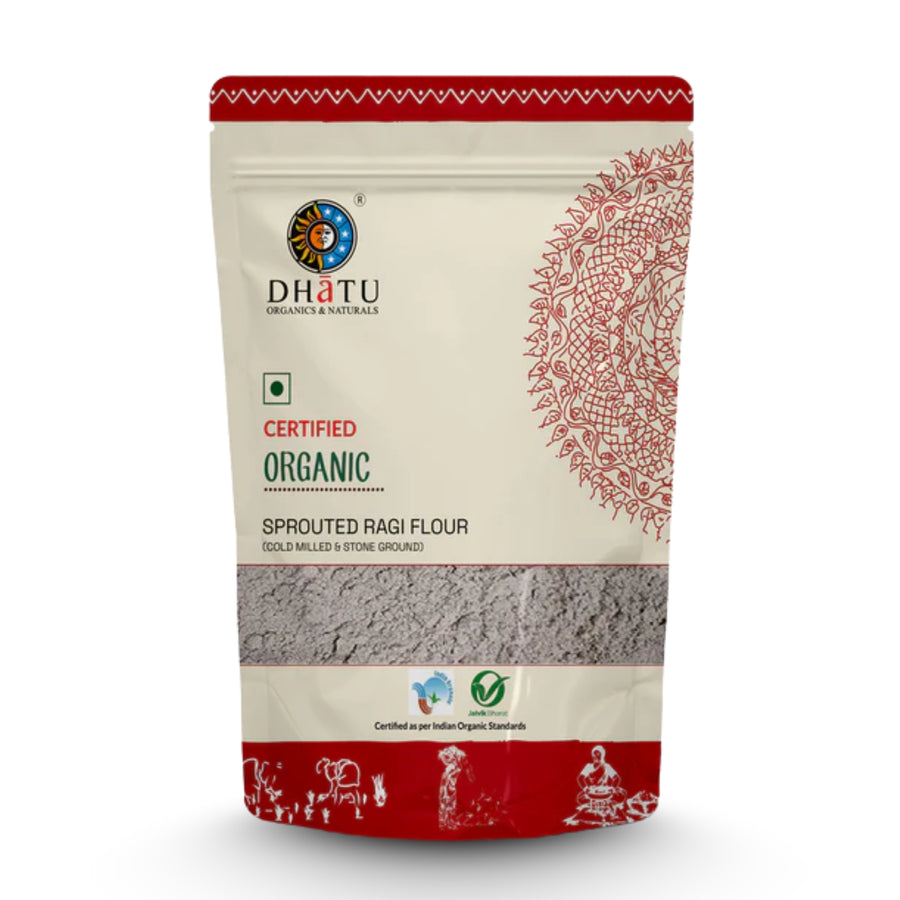
Iam very much like your cold milled sprouted ragi flour the way you are processing without losing nutrients as a healthy daily food which we are eating in different forms.
Thanks and best wishes to Dhatu Organics.
I’ve been using this sprouted ragi flour for a month now and the quality is top-notch.
It mixes really well and tastes much better than regular ragi flour.
Feels light on the stomach and keeps me full for longer.
Definitely switching to this permanently.
Really Tasty ragi powder
I have been making ragi roti, ragi dosa and ragi porridge with this. Everything turns out well. The sprouting makes a real difference in taste and I can feel the difference in energy.
I give this as ragi porridge to my 1 year old. He loves it. No additives, pure sprouted ragi. I feel confident giving it to him. Will keep buying as long as I need.
Packaging is neat and sealed well. Flour is fine and fresh. Made soft ragi rotis on first attempt. Good quality for the price. Delivery was also quick.
Buy this without thinking. Premium organic sprouted ragi at a fair price. I make ragi porridge, rotis and even ragi laddus. Versatile, healthy and genuinely tasty.
Once you try sprouted ragi you just cannot go back to regular. The texture is so much better and digestion is easier. My husband who hated ragi now asks for ragi dosas. Magic!
Superb quality. Reordering soon.
Satisfied with the purchase. Good ragi flour.
Nice fine texture, good quality ragi. I mix it with jowar flour 50-50 for rotis and it works great. Slightly more expensive than market but worth it for the organic certification.
Very happy with this purchase. Great stuff.
Traditional Karnataka ambali made with this flour tastes exactly like what my grandmother used to make. The sprouting makes it easy to digest and very filling. Excellent.
Clean, fresh, organic. Exactly what I wanted.
You can tell this is real sprouted ragi from the smell and texture. No chemical smell, no artificial anything. My whole family eats this now. Kids love ragi cookies I make.
Good product. Packaging could be better.
Genuinely good quality. Worth the price.
Been using for 3 months. Consistent quality, good taste, fine grind. Makes amazing ragi balls and porridge. Would give 5 stars if there was a 1kg option at this price.
Wonderful product. My family loves it.
I have tried 4 brands of sprouted ragi and Dhatu is the winner. The colour is darkest which indicates high anthocyanin content. Perfect for health smoothies.
Decent quality, will buy again if price drops a bit.
Top quality organic ragi. Very satisfied.
My mother is diabetic and her doctor suggested ragi. This sprouted version has lower glycaemic index. Her sugar levels have been more stable. Very happy with the product.
Love this flour. Making it a regular buy.
I appreciate that this is genuinely certified organic and not just a label. The flour smells fresh and has good shelf life. Perfect for ragi mudde as well.
Good but slightly expensive. Quality is fine.
Great product. Fast delivery too.
Switched from wheat rotis to ragi rotis and lost 4 kg in 2 months. This flour makes very soft rotis when you knead the dough with hot water. Highly recommend.
Pure and fresh. No complaints at all.
Nice quality ragi flour. Good for daily use.
Organic certification, sprouted, fine texture, no smell. What more do you want? I have been buying for 6 months now and quality is always the same. Thank you Dhatu.
Good quality ragi flour. Recommended.